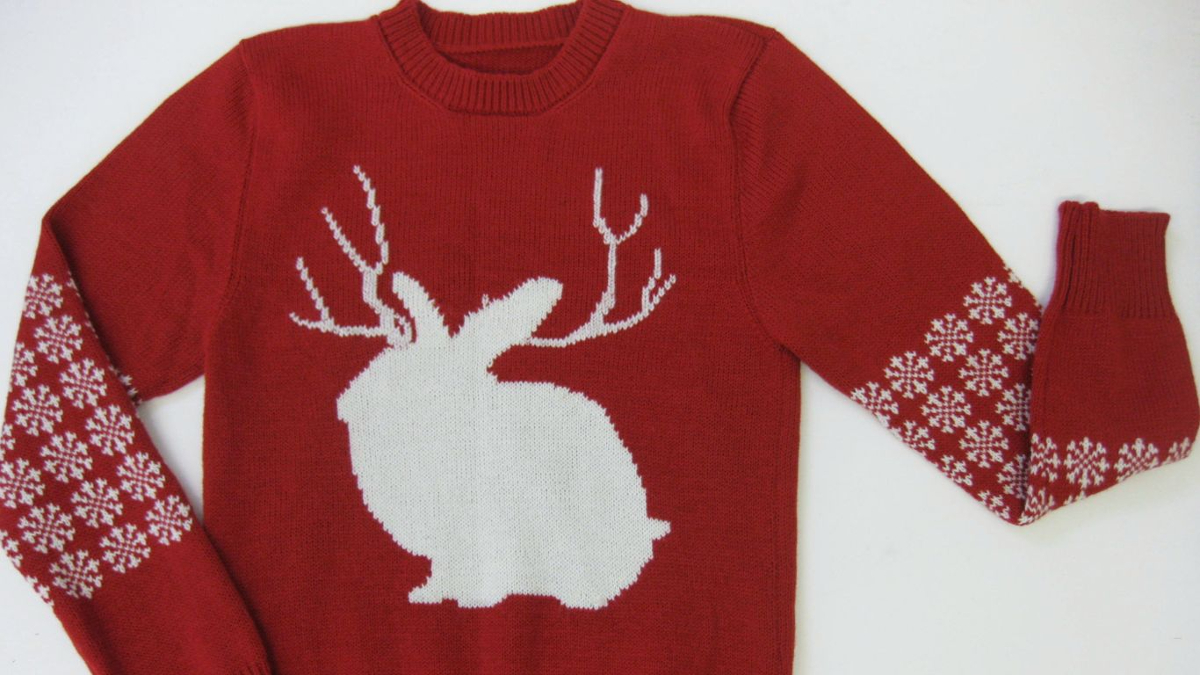
If you’re looking for a knitter to help you with a knitwear project, you have come to the right place. In this blog post, I will describe how I can help you create beautiful handcrafted knitwear: custom-made sweaters, knitted product prototypes, dresses, scarves… and lots more.

Bespoke knitwear design & making service
Creating handcrafted one-of-a-kind knitted items is my speciality. In the past, I’ve worked on everything from custom-made Christmas sweaters to orthopaedic sock prototypes.
The service that I offer is flexible and tailored to your needs. I provide my knitwear design and making skills and equipment, and we work collaboratively to create your garment(s) or product.
My studio is located in Cornwall, UK, but I’m happy to work remotely with people anywhere in the world.
No minimum order quantity
There’s no minimum order quantity. No project is too small, and no project is too “odd”. In fact, I love working on unusual projects, thinking outside the box and working out creative solutions to knitting challenges.
If you need help developing sample garments for taking to a manufacturer for production, I can help with that too.
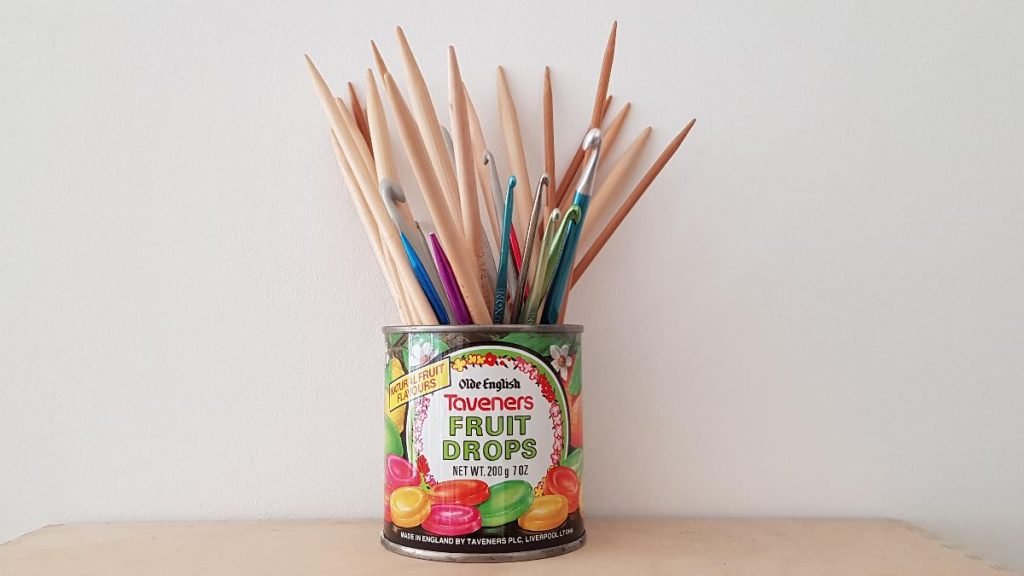
Hand knitting and machine knitting
Hand knitting or machine knitting? Not sure what the most suitable technique for your project is? No problem, just send me a message, and I’ll help you work it out.
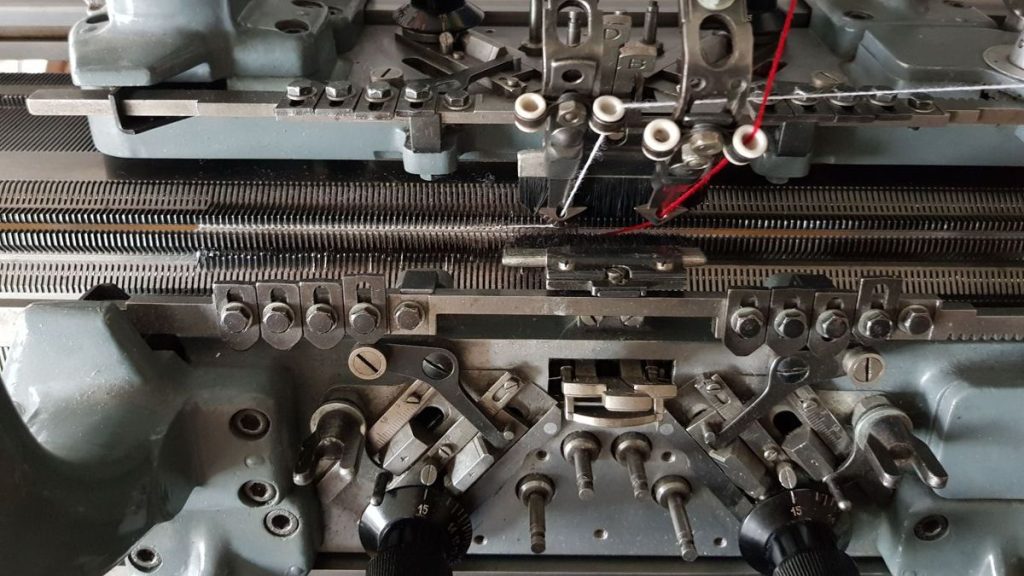
Vintage knitting machines, powered by hand
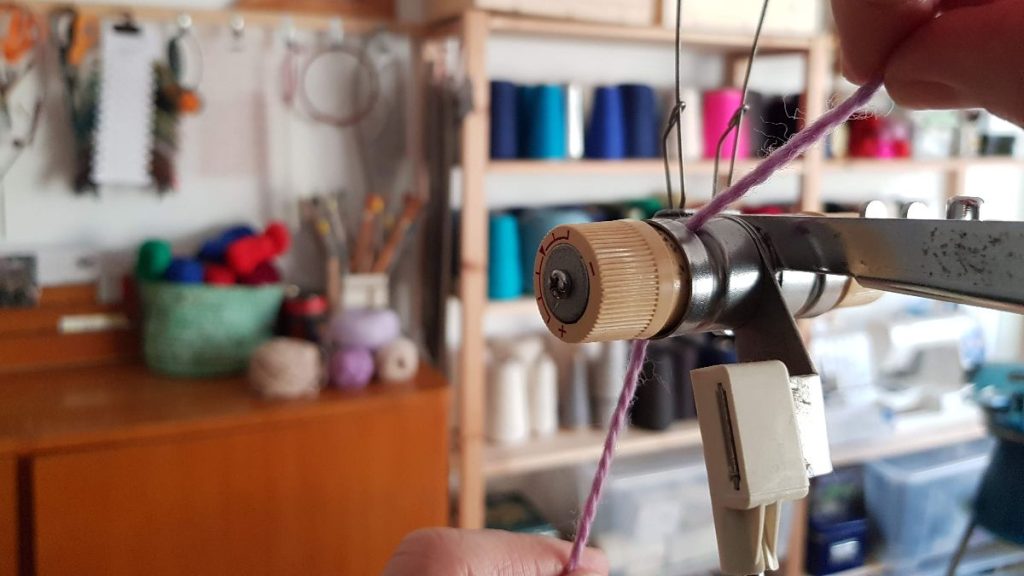
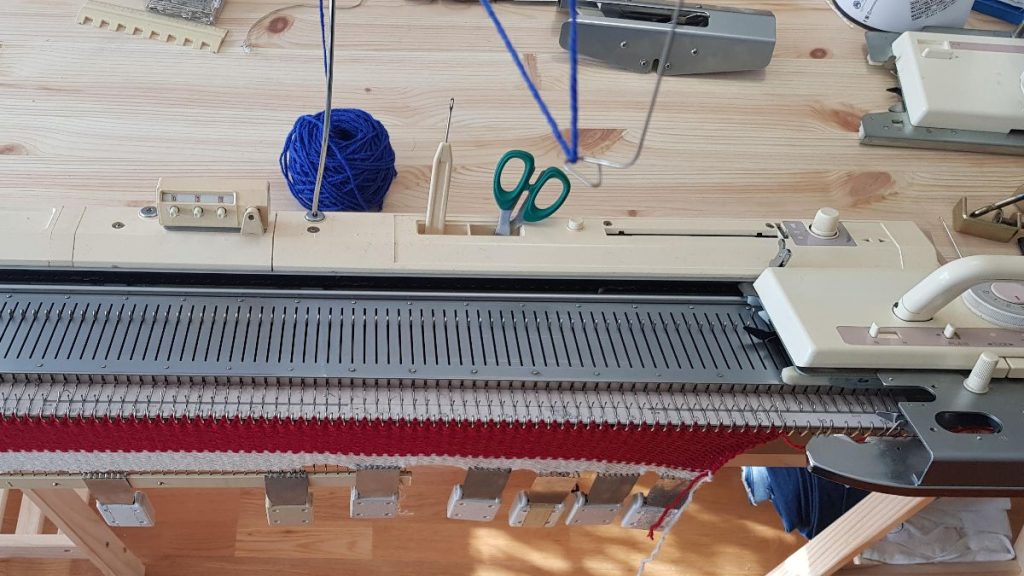
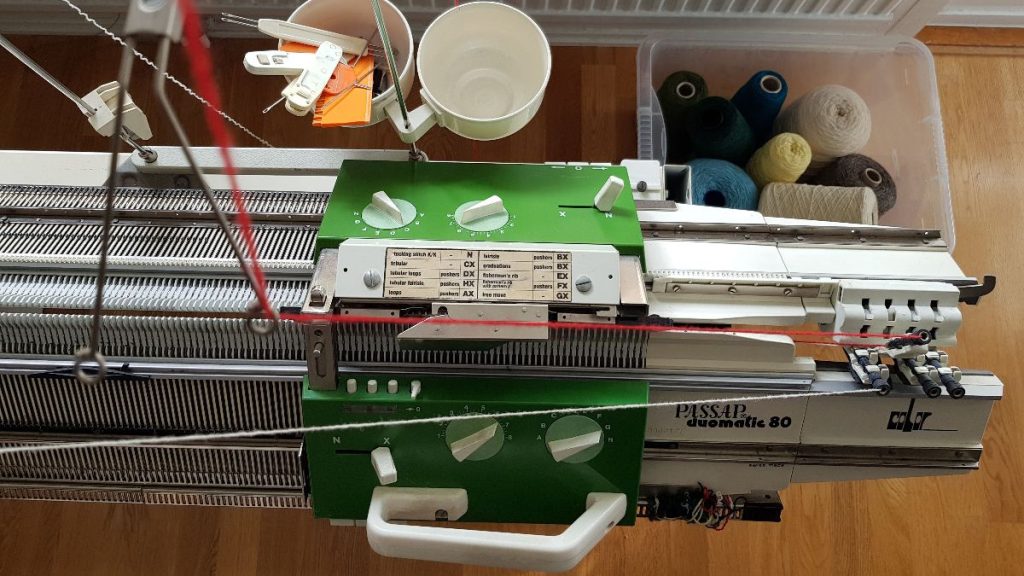
The knitting machines that I use are all vintage, hand-powered machines. They don’t require any electricity, making them great for creating sustainable, artisan knitwear.
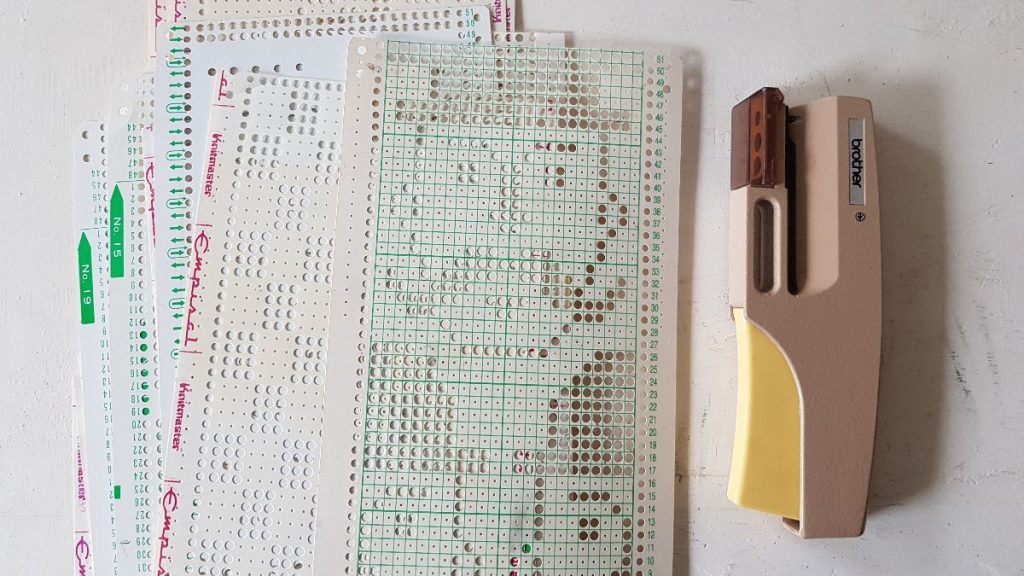
A wide variety of stitch patterns can be created, either by manipulating stitches by hand or by using old-school punch cards. Garment panels are shaped while knitting, resulting in a minimal amount of waste.
Zero waste, sustainable knitting
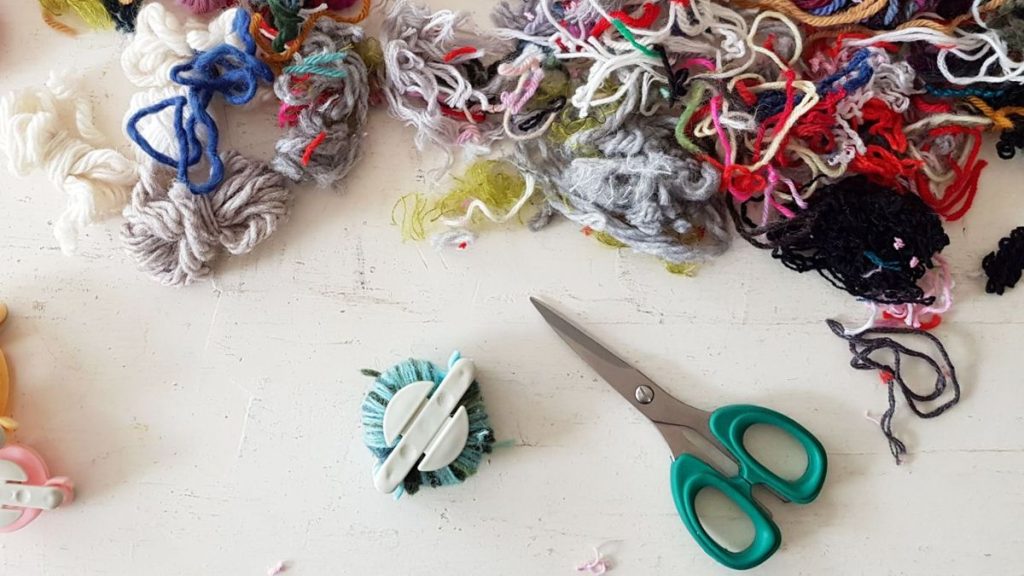
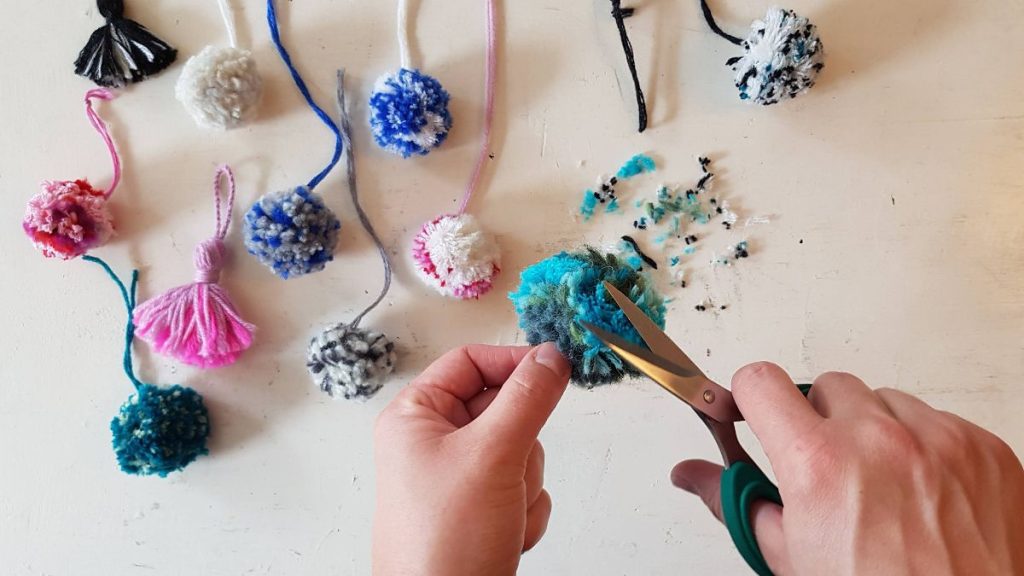
Any ‘waste’ that is left over from swatch knitting or garment production is put aside and will get reused or recycled. Yarn scraps can be used for making pom poms, tassels, and other embellishments, or for creating mending kits. Smaller scraps can be re-spun into new yarn.
Getting things started
Send an email to alex@alexjarup.com.
Please include some information about what you would like me to help you with. The more information you provide, the easier it will be for me to let you know if I can help.
Useful information to include:
- Garment, accessory, product – or something else?
- Machine knit, hand knit, or crochet?
- What type of yarn?
- Gauge – chunky, fine, or something in between?
- One size, or several?
- Just one item, or a small batch?
- Deadline? Budget?
If you don’t know the answer to some, or any, of these questions, that’s ok! I can help you work things out.

Feel free to share any sketches or images that you might have. They can be scribbles done by hand, or digital sketches of designs. Anything that will help communicate your idea is useful, and I definitely won’t judge your drawing skills.
When I have enough information, I will be able to work out a quote for your project. If you have a limited budget, it’s great if you let me know from the start. If money is tight, you might have to be prepared to make some compromises (either with choice of materials, or design choices).
I won’t share any confidential business information you have provided with anyone else. If you have concerns about confidentiality, I’m always happy to sign a Non Disclosure Agreement (please keep it short though, one A4 page preferably).
Yarn sourcing
You can buy and provide the yarn yourself, or if you prefer, leave the yarn sourcing to me.
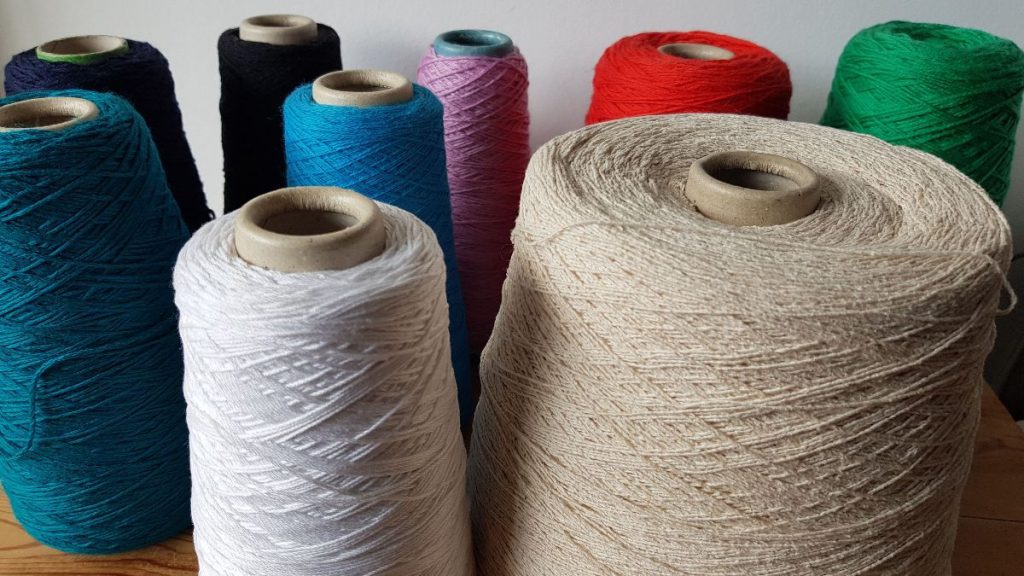
I have a selection of yarns of various weights available at the studio. Some are new, and some are leftover from projects I have worked on in the past. Using surplus yarns is great from a sustainability point of view, and also helps keep material costs down. If you require particular colours, I can hand-dye small batches of yarn.
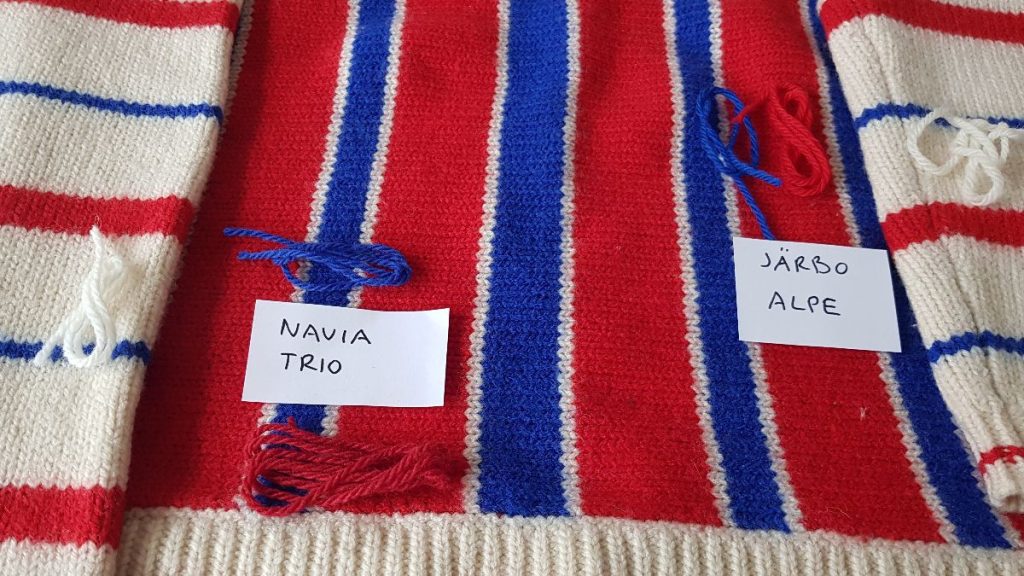
If a larger quantity of yarn is required, I will do my best to help you source the most sustainable option within your budget.
Please note that if you would like me to buy yarn for your project, I may ask for a deposit upfront to cover the cost.
Want some yarn inspiration? Check out my list of online shops in Europe (UK and EU) that sell yarn on cones in small quantities for machine knitting.
Design development & swatch knitting
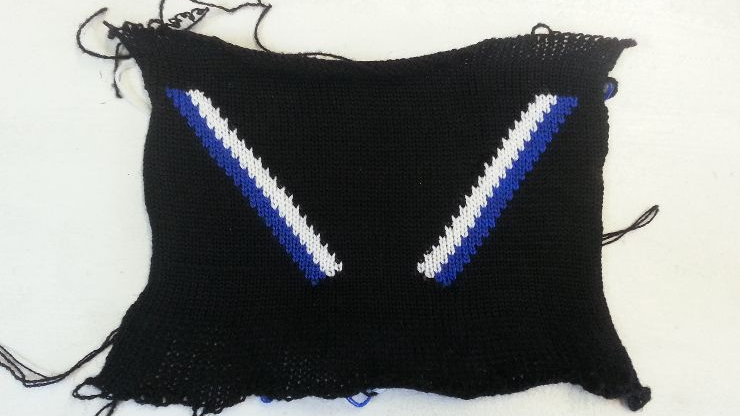
Based on your design idea, I will create a collection of swatches, using your chosen yarns. I have a range of machine knitted, hand knitted and crochet swatches that can be used as a starting point for design development.

If you want to incorporate specific imagery (logos, symbols, etc.), I can create custom-made colourwork and/or intarsia designs.
Swatches are washed and blocked using environmentally friendly detergent.
If we’re working to a tight deadline, you can approve swatches via email. Otherwise, I will post them to you, so you can have a proper look and feel. Once you have approved the initial swatches, we will work together to finalise your design. Then it’s time to start working on a pattern, and get your garment or product made!
Standard sizing or bespoke?
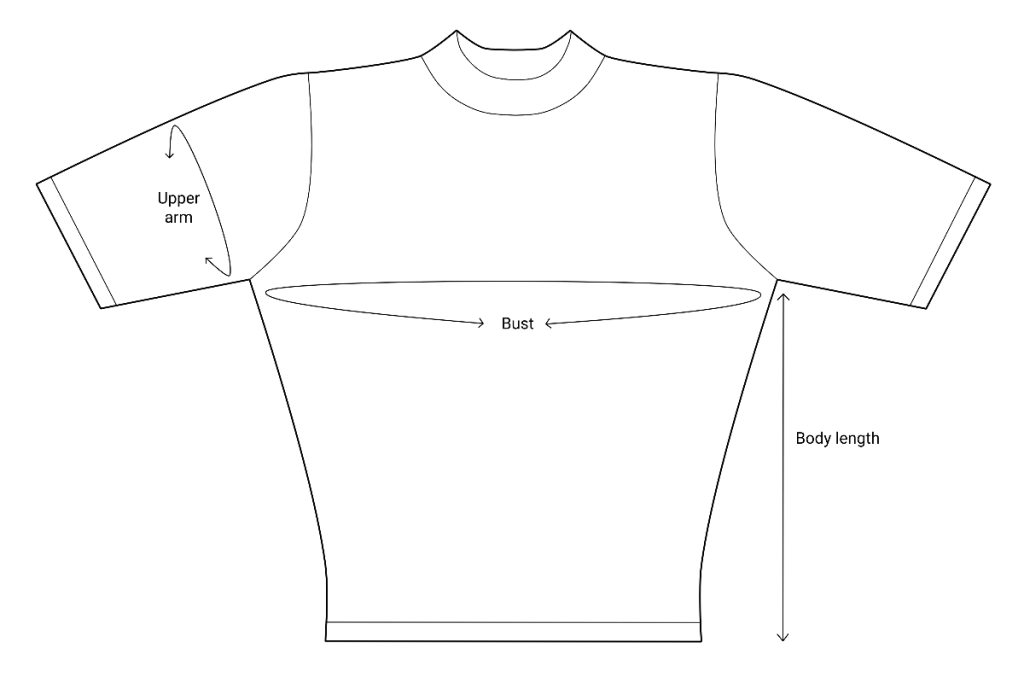
For a completely bespoke garment, made for a specific person, I will create a knitting pattern based on their individual measurements.
For ready-to-wear garments, I use standard size charts, based on average body measurements (for kids, women and men). Sample garments can be knitted in your preferred size(s). I can help you develop a size range that works for your project, and advise on size inclusivity. There’s plenty of scope for customisation here too: for example, if you prefer a longer than average sleeve on a jumper or if you want to create a unisex size range.
Knitting your garment or product
Unlike woven garments, knitted garments and products can’t easily be tweaked (by taking in seams, or rehemming, for example) if the fit isn’t quite right. This is one of the major challenges when creating bespoke knitwear. Here are some things that can be done to avoid fit issues:
- Knitting a large enough gauge swatch, and letting it hang (as it would on a body), to make sure measurements are as accurate as possible, before working out a knitting pattern.
- Test knitting garment details, before knitting the final garment. For example, knitting up a neckline, a sleeve, or trimmings.
- Washing, blocking, and checking the fit of individual pattern pieces (for example, a sleeve, or the front of a sweater), before knitting and assembling the final garment.
- Consider adaptability during the design process. For example, if a sweater is hand-knitted in the round, from the top down, it’s easy to add extra length to the body and sleeves if needed.

Following these steps is a pretty good way of ensuring that the fit will be just as you imagined. However, there may still be issues that need tweaking, or you might change your mind about something: you might realise that the length that you had decided on for a sleeve isn’t quite right after all, or that you want a different neckline. It’s always good to allow a little bit of extra time and budget for making changes.
Finally, if you’re taking the garment(s) to a manufacturer for production, I will provide all the information they will need to recreate the design.
Small batch production & made-to-order
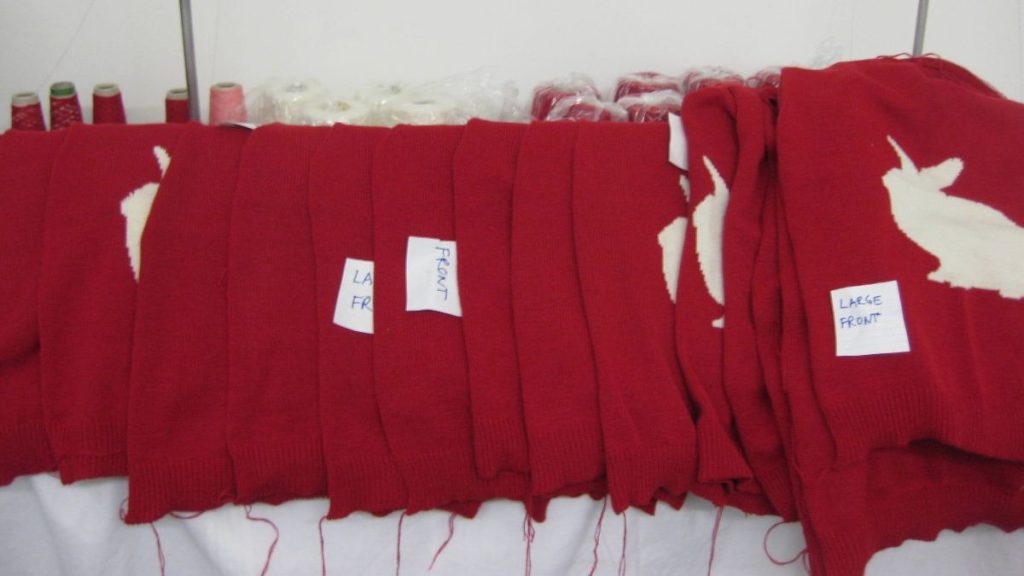
I can help you with small batch production, as well as made-to-order production, at my studio. This might be a good option for you if you want to create ethical knitwear, with complete insight into the manufacturing process, and without committing to large minimum orders.
Before starting production, I will send a sample garment to you for approval. If we’re working to a tight deadline, I can arrange a fitting at my studio. If possible, you can join in via video chat, or I can send images or a video to you for approval.
Production cost per garment depends on the complexity of the design, and how many items you need. For bigger projects, I will sometimes recruit extra knitters to help with production. Knitters are always paid a fair wage. I do not use unpaid interns for production work.
How much is it going to cost?
Here are some factors that can impact the cost of making a bespoke knitted garment or product:
- Material costs. Using surplus yarns is a good option if you’re on a budget.
- The complexity of the design. Garments with complex stitch patterns, intricate details or a lot of shaping will take longer to knit and therefore cost more than a simple stockinette garment.
- Lead time. Rush orders may incur an additional fee. If you want to keep costs down, please plan ahead.
- Size requirements. Grading a pattern into several sizes takes more time than creating a one-size pattern.
Payment terms: If I need to order yarn for your project, I may ask for a deposit to cover the cost of purchasing yarn. If you provide yarn, or if I’m using yarn from my workshop, I invoice after each phase of the project is finished. Payment for phase 1 (i.e. design and swatching) is required before moving on to subsequent phases (sample knitting, or garment production) unless otherwise agreed.
Please contact me for information about my current rates.
How to get in touch
Send an email to alex@alexjarup.com
Feel free to get in touch with any questions or ideas, or to request a quote. I’m always happy to answer questions, and if I can’t help I will try to point you in the direction of someone who can.